
Share
Why Bleeding Gums Shouldn’t Be Ignored
Understanding what your gums are telling you — and why acting early makes all the difference to your long-term oral health.
Blood on the toothbrush is easy to explain away. Perhaps you brushed too firmly, perhaps it was a one-off. For many patients, it happens regularly for months – sometimes years – before they mention it to a dentist. By that point, what began as a small, manageable problem has often had time to develop into something that requires more involved care.
Gum health treatment in Surbiton is something the team at Surbiton Smile Centre addresses with patients every day. It is one of the most common concerns raised at appointments, and one of the most consistently underestimated. The gums are not a peripheral concern. They are the foundation on which everything else in the mouth depends.
What Bleeding Gums Usually Mean
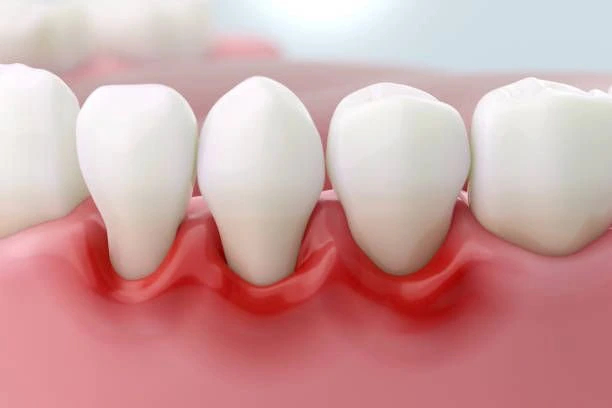
Healthy gum tissue does not bleed during normal brushing. When it does, inflammation is almost always involved – and that inflammation has a cause worth identifying.
The most common explanation is gingivitis: an early-stage gum condition driven by plaque build-up along the gumline. Plaque is a soft bacterial film that forms on teeth throughout the day. Left undisturbed, it irritates the surrounding tissue, causing it to become swollen, tender and prone to bleeding. At this stage, the condition responds well to professional care and consistent home hygiene.
Without attention, gingivitis can progress into periodontitis – a deeper infection affecting the bone and ligaments that hold teeth in place. That progression is not inevitable, but it does happen when early signals are left unaddressed. Other contributing factors include certain medications, hormonal changes, smoking and vitamin deficiencies. A careful clinical assessment distinguishes between them.
What a Gum Health Assessment Involves
Attending an appointment about bleeding gums is not something to put off out of embarrassment. A thorough assessment gives the dentist the information needed to plan care that is appropriate to your actual situation – not a generic response.
During a gum health review, a dentist or hygienist will measure the depth of the pockets between the gums and teeth using a fine periodontal probe. Healthy pockets sit at around one to three millimetres. Deeper readings indicate that the gum tissue has begun to separate from the tooth surface – a sign of advancing disease that warrants closer attention and a staged treatment plan.
X-rays may also be taken to assess bone levels beneath the gumline. Patients in the Surbiton and Kingston area who have avoided this kind of assessment for some time often find the process considerably more straightforward than they anticipated. Your dentist will also ask about brushing technique, diet and any medications — all of which contribute to the clinical picture.
Gum Health Treatment: What the Options Are
For early-stage gum disease, a professional hygiene appointment is typically the first and most important step. A hygienist removes hardened calculus – tartar deposits that brushing alone cannot shift,from at and below the gumline. Removing these deposits eliminates the bacterial environment driving the inflammation.
Where disease has progressed, root surface debridement may be recommended. This is a thorough cleaning of the root surfaces beneath the gumline, carried out under local anaesthetic, that allows the gum tissue to reattach and stabilise. Most patients tolerate it well. Any post-treatment sensitivity typically settles within a few days.
In more advanced cases, onward care with a periodontist, a specialist in gum disease, may be appropriate. At Surbiton Smile Centre, gum health treatment is staged carefully, allowing the tissue time to respond between appointments before any further steps are considered. Throughout treatment, patients receive clear guidance on home care: brushing technique, interdental cleaning and any adjuncts that support recovery between visits.
Why Gum Health Matters Beyond the Mouth
Treating gum disease is not only a dental decision, it is a contribution to your wider health, because chronic oral inflammation does not remain contained to the mouth.
Research has consistently linked periodontal disease to systemic conditions including cardiovascular disease and diabetes, though the precise nature of those relationships continues to be studied. What is well established is that bacteria present in significant gum disease can enter the bloodstream, and that chronic inflammation places a broader burden on the body.
From a purely functional standpoint, the gums and bone provide the stable foundation that teeth depend on. As that foundation deteriorates, teeth can become mobile over time, affecting bite, comfort and the straightforward ability to eat without difficulty. Addressing gum disease early preserves that stability.
For patients considering future restorative or cosmetic treatment, whether dental implants, crowns or other work, good gum health is a prerequisite. No well-planned dental treatment is built on a compromised foundation, and any reputable clinician will address gum health before anything else.
What Patients Most Often Misunderstand
The single most common misconception about gum disease is that bleeding gums are a sign of brushing too hard, and therefore that brushing more gently will resolve it. Occasionally that is true. Far more often, the bleeding is the body’s response to bacterial irritation, and brushing more gently simply reduces the stimulus without addressing the cause.
Another common assumption is that gum disease is irreversible. Gingivitis, the earliest stage, is genuinely reversible with professional cleaning and consistent home care. More advanced periodontitis cannot be fully undone, but it can be effectively stabilised, preventing further progression and protecting the teeth and bone that remain. Stable gum disease, properly maintained, need not lead to tooth loss.
Frequently Asked Questions
Is it normal for my gums to bleed when I brush? Regular bleeding during normal brushing is not something to dismiss. It usually signals gum inflammation, and a dental assessment will identify the cause and the right response. Occasional minor bleeding from very vigorous brushing is different, but if it happens consistently, it warrants attention.
Can gum disease be reversed? Gingivitis, the earliest stage, is generally reversible with professional cleaning and good home hygiene. More advanced periodontitis cannot be fully reversed, but it can be stabilised effectively to prevent further bone and tissue loss.
How often should I see a hygienist for gum health? This depends on your individual susceptibility to plaque build-up, your home care routine and the current state of your gum health. Many patients benefit from hygiene visits every three to six months. Your dentist or hygienist will recommend an interval that reflects your specific needs.
Will gum treatment be uncomfortable? Most patients find professional cleaning straightforward. Where deeper cleaning beneath the gumline is needed, local anaesthetic is used to keep the procedure comfortable. Any sensitivity in the days afterwards typically settles quickly.
Can bleeding gums come back after treatment? Gum disease is a chronic condition for many people, which means long-term maintenance matters. With regular hygiene appointments and consistent home care, it is entirely possible to keep gum health well controlled over time. The aim is stability, not a one-time fix.
Surbiton Smile Centre
Small changes in oral health are easier to treat when they are understood early. Surbiton Smile Centre provides calm, preventative dental care focused on long-term comfort and confidence.
To book an appointment or ask a question:
📞 020 8339 9933 ✉ [email protected] 🌐 surbitonsmilecentre.co.uk
This article is general guidance and does not replace a dental examination or diagnosis.
Written by Dr Simin Soltani
Gum disease, also known as periodontal disease, is one of the most common oral health issues affecting adults worldwide. If left untreated, it can lead to tooth loss, jawbone deterioration, and even impact overall health. Fortunately, periodontal treatment in Surbiton offers a proven way to prevent and
Tooth decay is one of the most common dental problems in the UK, yet it is often overlooked until pain or visible damage appears. Many people assume decay only affects children, but adults are just as vulnerable—especially when early warning signs are ignored. Dr Soltani,