
Share
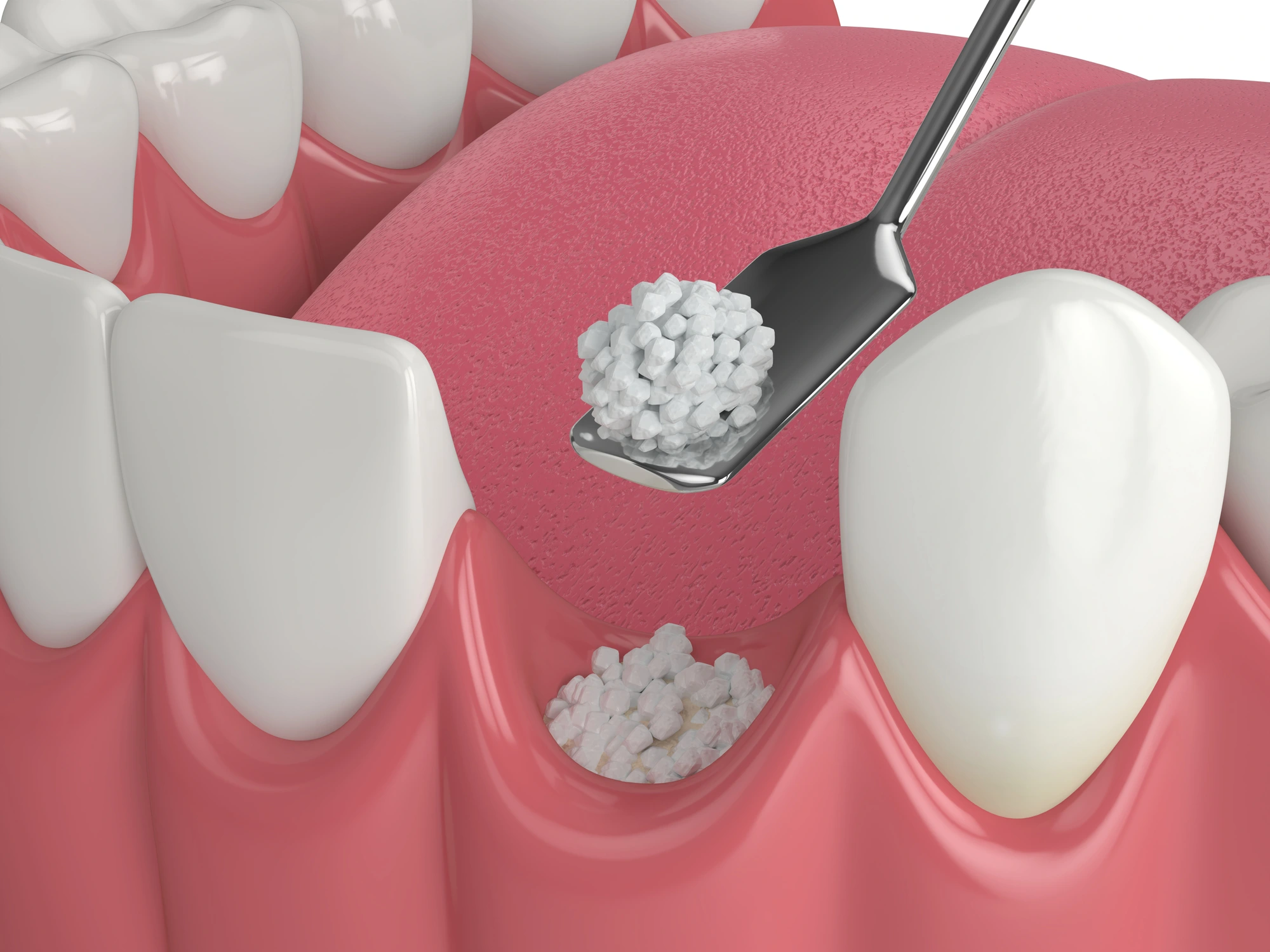
Complete tooth loss is usually a function of the patient’s age. It will often be accompanied by the loss of available bone substance, which may be insufficient to support implants, therefore the treatment time is lengthened considerably.
A safe foundation is essential for any implant. If no safe foundation is available, an implant cannot be inserted. The bone has to be built up first. There are several ways of doing this, depending on what is feasible for each patient.
Sometimes it is possible to remove a piece of the patient’s bone at a suitable location and transplant it to where more jawbone substance is needed.
The patient’s bone will fuse with the existing jawbone to form a stable structure over time.
Alternately, it is possible to use bone replacement material, which triggers a biological process that results in creating more stable bone substance for dental implants.
In the upper jaw, an additional layer of bone can be created by lifting the sinus floor above the implant site and lining it with bone replacement material.
Have questions about dental implants?
Do get in touch on 020 8339 9333 or by filling out the contact form below.

Achieving a straight, confident smile is a goal for many people, and understanding the duration of teeth straightening is an essential part of planning orthodontic treatment. The timeline can vary depending on the severity of dental misalignment, the type of treatment used, and individual patient

Temporomandibular joint (TMJ) disorders are a common but often misunderstood dental condition that can cause jaw pain, difficulty chewing, headaches, and even ear discomfort. While there are several potential causes, one factor that patients frequently overlook is missing teeth. According to dentists at Surbiton Smile